|
What the World Needs Now
What if there were a perfect society that could
only produce the happiest, healthiest, most loving
people you could ever imagine you’d want to be
around and spend time with, even create your own
life with or alongside?
What would that society look like? Who would
those people be?
Decades ago I attended one of the most
awe-inspiring and powerful talks by any person
I’d ever heard speak. His name was Huston
Smith, a scholar of comparative religion born in
China, educated in the US, now 96, and author of
the most popular introduction to world religions
ever sold, The World’s Religions.
He had the rapt attention of his audience with
his penetrating exploration and thinking on a
larger scale than most of us usually do. He helped
plant the seeds in me for the questions I just
asked you.
What Smith said was that through his travels and
studies he discovered that world cultures could be
grouped into three distinct groups, each with a
primary cultural characteristic. One group he
identified as the West included the US, Canada and
Europe and promoted the development of the
individual as the most important characteristic;
the Far East including China, Japan and similar
societies emphasized the greater good of the group;
and India had traditionally pursued the inner world
of spiritual development.
He proposed that we take each of these
characteristics and blend them into a unified whole
that would support the full development of
individuals and utilize the power of cohesive and
harmonious groups and teams to create a greater
good for all.
What brought that long ago lecture freshly back
to mind for me is the experience I am now having
with a wonderful group of Japanese culture changers
at a nine day training on Lago Maggiore in northern
Italy, a training created by my colleagues Janet
and Chris Attwood, co-authors of the NY Times best
selling book, The Passion Test: The Effortless Path
to Discovering Your Life Purpose.
Not long ago, I had coached a Japanese man who
translated The Passion Test book into Japanese and
is now himself a best-selling author of
self-empowerment books in his country. Through the
Attwood’s focused efforts, the Passion Test
and associated processes and tools have quickly
become recognized as a beautiful way to capture the
best characteristics of both West and East
underpinned by the Attwood’s life long
commitment to inner development as an important
basis for individual achievement, human liberation
and social transformation.
As this group from Japan opens to receiving the
training and support to become powerful national
leaders in Japan and Europe, I am touched to my
core by these men and women sharing their
discoveries about themselves as they go deeper and
deeper into what may have held them back, release
that and fully claim the unique gifts they each
have to offer the world and each other as team
members working intimately and effectively together
to inform, educate and move their society in the
direction of fulfilling it’s greater destiny.
And I am struck by our shared humanity across
cultures as I live and work here for this time in a
country full of passionate people, the Italians,
whose language I am learning to speak with another
people’s language I’ve never had much
exposure to at all, Japanese and it’s
beautiful pictographic form of writing. The
gracious and highly skilled Japanese interpreters
for the group are true bridgers of worlds for us as
we travel through each other’s inner
territories together experiencing laughter, tears,
closeness between us as individuals and a feeling
of unity that is powerfully palpable.
Indeed, I believe I've begun to do more than
hope for or imagine that society I asked you about.
I am living in it. And it is about go viral.
©2015, Randy
Crutcher
* * *

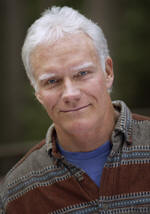
Randy
Crutcher has over three decades of experience as a
teacher, counselor, and community
organizer/builder. He is a personal and
professional development coach, facilitator, and
consultant to both large institutions and small
organizations in the public, private, and
non-profit sectors. He has done extensive work with
men and boys to become all they can be having
opened one of the first state grant funded
men’s counseling center’s in America. He
developed programs to assist men in learning
alternatives to violence, father and son workshops
and gatherings.

Contact
Us |
Disclaimer
| Privacy
Statement
Menstuff®
Directory
Menstuff® is a registered trademark of Gordon
Clay
©1996-2023, Gordon Clay
|