Indy
Lights 
Menstuff® has compiled the following information on Indy Lights, the feeder circuit for Indy Cars.

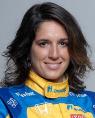
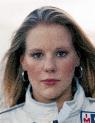
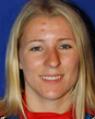
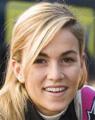
Pippa Mann won most popular Indy Lights driver in 2010. Congrats!
About
Snippets
Schedule: 2010,
2009,
2008,
2007
Indy Pro Series
Contact www.indycar.com/pro/
 or E-Mail
or 2008
Schedule
or E-Mail
or 2008
Schedule
Related Issue:
Women
Racers Directory,
Women
in Racing,
Women
Racers,
More
Women in Racing,
Notable
Women,
ALMS,
Iditarod,
IRL,
NASCAR,
Soap
Box Derby
Firestone Indy Lights is a developmental racing series sanctioned by the Indy Racing League. Previously, another series named Indy Lights filled the same role for CART and ran from 1986 to 1990 as the American Racing Series and Dayton Indy Lights from 1991 to 2001. The IRL-sanctioned current series was founded in 2002 as the Infiniti Pro Series as a way to introduce new talent to the IRL and coincided with Infiniti's departure from the IRL's premier IndyCar Series.
Indy Pro Series - The Fast Track to Indy
The Indy Pro Series is a developmental racing series sanctioned by the Indy Racing League. It was founded in 2002 as a way to introduce new talent to the IRL and coincided with Infiniti's departure from the IRL's premier Indycar series. It is a spec series using a modified 3.5L version of the V8 engine used in the Infiniti Q45 combined with Dallara chassis. The series initially struggled to attract drivers and some races have had fewer than 10 entrants. However, with the introduction of a number of road-course races to the schedule in 2005, many of America's top prospects like Marco Andretti and Phil Giebler were attracted to the series to run part-time schedules on the road courses. In 2006, a boost in prize money even further increased car counts to 16 or more, with an even six ovals, six road course mix, with selected races being double races, and a stand-alone race (independent of the IndyCar Series) on the USGP weekend. The series was called the Menards Infiniti Pro Series until 2006 when both Menards and Nissan dropped their sponsorship of the series. 2007 car counts have improved further with 20 or more cars in every race.
The centerpiece of the IPS schedule is the Freedom 100, contested at Indianapolis Motor Speedway on the Friday prior to the Indianapolis 500. The Indy Pro Series also has held a support race for the United States Grand Prix later in the year. It is the series' only event that is not a support race to an IndyCar event.
On September 9, 2007, during the Chicagoland 100, Logan
Gomez beat Alex Lloyd by 0.0005 seconds (approximately 1.65
inches, or 25.4, mm at 188 mph) which reflects the closest
recognized finish in the over century-long history of
organized automobile racing throughout the world. In 2008,
the margin was established by the Guinness Book of World
Records as the closest finish ever in a car race.
Original series (1986 to 2001)
The original Indy Lights series was an open-wheeled racing series that acted as a developmental circuit for CART from 1986 to 2001. it was founded in 1986 as the American Racing Series (ARS). The series was renamed Indy Lights in 1991. The CART-sanctioned series became widely popular and secured the title sponsorship of first Firestone (the series's exclusive tire supplier) then Firestone's subsidiary Dayton Tires.
The Indy Lights schedule closely followed that of the CART series, with the noteworthy exception of Indianapolis. The series typically had a gap of up to a month while the primary CART teams raced at the Indy 500. The races were usually held the morning of the CART series races, as an undercard, support event. In many early years, the Indy Lights series skipped superspeedway races such as Michigan, but eventually it found its way to race there.
By the late 1990s and early 2000s, CART was suffering from financial problems and it canceled the minor league after the 2001 season. By this time the Toyota Atlantic series was equally effective in providing CART with new drivers. The Atlantics effectively became CART's primary feeder system. Later, it officially became Champ Car World Series' in-house feeder championship. The series' championship winners include two CART champions, two IndyCar Series champions, seven CCWS race-winners and two Formula One drivers.
A spec-series, CART Indy Lights used March chassis (essentially a modified 85B Formula 3000 chassis, renamed to Wildcat) from 1986 to 1992. Lola provided chassis from 1993 to 2001. Buick V6 engines were used for its entire existence.
The current series was founded by the Indy Racing League and began racing in 2002, the year after the original series' demise. Prior to the series' inception the IRL had no in-house developmental league. It is a spec series using a modified 3.5L version of the V8 engine used in the Infiniti Q45 combined with Dallara chassis producing 420 horsepower. The series initially struggled to attract drivers and some races have had fewer than 10 entrants. However, with the introduction of a number of road-course races to the schedule in 2005, many of America's top prospects like Marco Andretti and Phil Giebler were attracted to the series to run part-time schedules on the road courses. In 2006, a boost in prize money even further increased car counts to 16 or more, with an even six ovals, six road course mix, with selected races being double races, and a stand-alone race (independent of the IndyCar Series) on the USGP weekend.
The series was called the Menards Infiniti Pro Series until 2006 when both Menards and Nissan dropped their sponsorship of the series. It was then known as the Indy Pro Series. 2007 car counts improved further with 20 or more cars in every race. On March 26, 2008; the series announced a changing of names. The historical records and proprietary information of Champ Car were acquired by the IRL. The series then became known as Firestone Indy Lights. The name reflects the heritage of the original Indy Lights series.
Green flag for the 2008 Miami 100 at the Homestead-Miami Speedway.The centerpiece of the Indy Lights schedule is the Firestone Freedom 100, contested at Indianapolis Motor Speedway on the Friday prior to the Indianapolis 500. The series also held a support race for the U.S. Grand Prix, the Liberty Challenge, from 2005 to 2007. It was the series' only event that is not a support race to an IndyCar event.
On September 9, 2007, during the Chicagoland 100, Logan
Gomez beat Alex Lloyd by 0.0005 seconds (approximately 1.65
inches, or 42.0 mm, at 188 mph) which reflects the closest
recognized finish in the over century-long history of
organized automobile racing throughout the world.[2]
In 2008, the margin was established by the Guinness Book of
World Records as the closest finish ever in a car race.
Leading into Indy after three races, Pippa Mann ranks 10th and Rookie Carmen Jorda ranks 12th of 21 racers.
Carmen Jorda joins Pippa
Mann as the two women competing in the 2010 series
against 12 men. Season starts March 28 in the Streets of St.
Petersburg
March 28 - Streets of St. Petersburg
,
FL 1.8-mile street courseApril 11 - Barber Motorsports Park, Alabama - 2.38 mile road course
April 18 - Streets of Long Beach
Long Beach, CA 1.968-mile street courseMay 28 - Indianapolis Motor Speedway
IN, 2.5-mile ovalJune 19 - Iowa Speedway, Newton, IA .875-mile oval
July 4 - Watkins Glen International Raceway
,
NY, 3.37-mile road courseJuly 18 - Streets of Toronto, 1.721-mile street course
July 25 - JAGflo Speedway
at City Centre Airport, Edmonton, AB 1.973-mile airport
courseAugust 8 - Mid-Ohio Sports Car Course
,
Lexington, OH, 2.258-mile road courseAugust 22 - Infineon Raceway
,
Sonoma, CA 2.303-mile road courseAugust 28 - Chicagoland Speedway
,
IL 1.5-mile ovalSeptember 4 - Kentucky Speedway
Sparta, KY 1.5-mile ovalOctober 2 - Homestead-Miami Speedway
FL 1.5-mile ovalApril 4-5 - Streets of St. Petersburg
,
FL 1.8-mile street courseApr 18 - Streets of Long Beach
Long Beach, CA 1.968-mile street courseApril 25 - Kansas Speedway
,
KS 1.5-mile ovalMay 22 - 93rd Indy 500, Indianapolis Motor Speedway
IN, 2.5-mile ovalMay 30 - The Milwaukee Mile
,
West Allis, WI 1-mile ovalJune 20 - Iowa Speedway, .875-mile oval Newton, IA .875-mile oval
July 4- Watkins Glen International Raceway
,
NY, 3.4-mile road courseJuly 11 - Streets of Toronto, 1.721-mile street course
July 25 - JAGflo Speedway
at City Centre Airport, Edmonton, AB 1.973-mile airport
courseAugust 1 - Kentucky Speedway
Sparta, KY 1.5-mile oval (night)
August 8 - Mid-Ohio
Sports Car Course ,
Lexington, OH, 2.258-mile road course
August 22 - Infineon
Raceway ,
Sonoma, CA 2.245-mile road course
August 29 - Chicagoland
Speedway ,
IL 1.5-mile oval (night)
October 10 - Homestead-Miami
Speedway
FL 1.5-mile oval
March 29 - Homestead-Miami Speedway
FL 1.5-mile ovalApril 5-6 - Streets of St. Petersburg
,
FL 1.8-mile street courseApril 27 - Kansas Speedway
,
KS 1.5-mile ovalJune 1 - The Milwaukee Mile
,
West Allis, WI 1-mile ovalJune 21 - Iowa Speedway, .875-mile oval Newton, IA
July 5 - Watkins Glen International Raceway
,
NY, 3.37-mile road course double-headerJuly 12 - Nashville Superspeedway
,
TN 1.33-mile ovalJuly 19-20 - Mid-Ohio Sports Car Course
,
Lexington, OH, 2.258-mile road courseAugust 9 - Kentucky Speedway
Sparta, KY 1.5-mile ovalAugust 23-24 - Infineon Raceway
,
Sonoma, CA 2.4-mile road courseSeptember 7 - Chicagoland Speedway
,
IL 1.5-mile oval

WomenInRacing.org
©1996-2023 by of Gordon Clay